In the first post of this series, we talked about home gyms vs commercial gyms and how the “best” option is the one that helps you stay consistent.
If you’ve decided that working out at home fits your life right now—or even if you want the flexibility to do both—this post will help you set up a home gym that actually gets used.
Because a home gym doesn’t need to be fancy.
It needs to be functional, inviting, and simple enough to support consistency.
Start With the Goal: Consistency
Before buying equipment or rearranging a room, start here:
What will make it easier for me to work out regularly?
Not what looks impressive.
Not what social media says you need.
But what removes friction and makes starting feel doable.
When a home gym feels overwhelming, cluttered, or complicated, it quickly becomes another thing on your to-do list instead of something that supports you.
1. Space to Move and Feel Comfortable
You don’t need a full room—but you do need enough space to move and feel okay being there.
Physically, you need room to:
- Lie down
- Squat, hinge, and (hopefully) reach overhead
Mentally, the environment matters just as much. This is a HUGE detail that often gets overlooked.
If you’re staring at clutter, piles of laundry, or things that stress you out, you are going to dread your workout even more, making it wayyy easier to skip.
Your home gym space doesn’t need to be perfect or aesthetic. It just needs to feel:
- Clear
- Calm
- Inviting enough that you don’t dread being in it
Sometimes simply clearing one corner, choosing a quieter space, or even putting up a room divider/curtain over the clutter makes a bigger difference than buying new equipment.
2. Start With What You Have (Even If That’s Nothing)
One of the biggest myths about home workouts is that you need equipment to begin.
You don’t.
Bodyweight workouts are more than enough to build strength, improve endurance, and create consistency—especially when you’re getting started. Squats, lunges, hinges, push-ups, and planks can take you a long way. This link has great bodyweight workout to get you started.
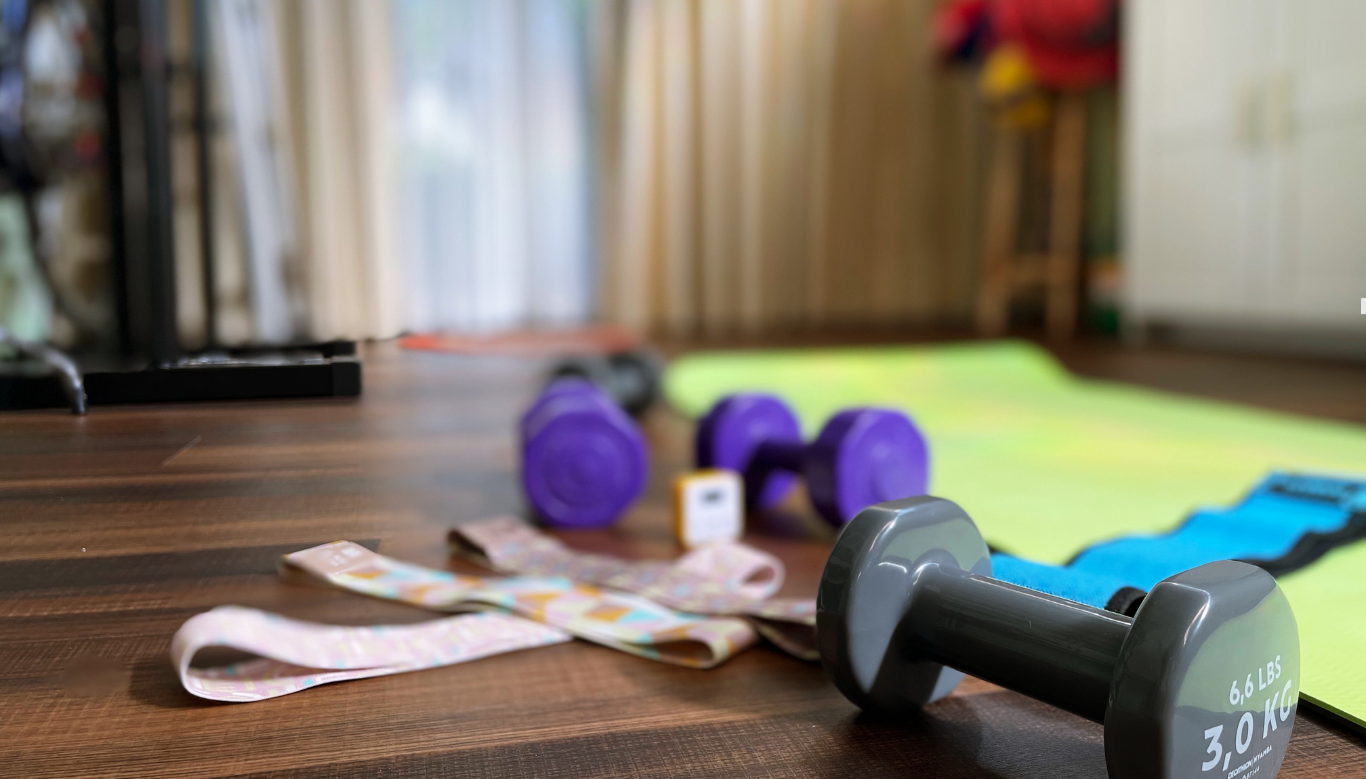
When you’re ready to add a little variety, bands are often the best next step. They’re affordable, take up very little space, and allow you to increase resistance without a big investment. My preference are minibands and I have a full workout utilizing them.
I’ve also shown how to get creative at home using household items like a laundry jug or duffel bag. These are great short-term solutions and can absolutely work when you’re starting out.
Over time, many people choose to invest in:
- Dumbbells or adjustable dumbbells
- A bench
These aren’t required on day one, but they can add variety and make progressive strength training easier long-term.
3. A Clear Plan Matters More Than Equipment
This is often the most overlooked part of a home gym.
You can have equipment and space, but if you’re standing there wondering what to do, consistency becomes harder. A clear plan removes decision fatigue and helps you make the most of whatever setup you have.
That’s why following a structured program—especially one designed to work at home or in the gym—can be so helpful. When your workouts are planned for you, your environment becomes a support instead of a barrier.
This flexible approach is exactly how workouts are structured inside Level Wellness On Demand, so whether you’re using bodyweight, bands, or dumbbells, you’re never stuck guessing what to do.
What’s Optional (But Not Required)
Once you’ve built consistency, you may choose to add more equipment. Think of these as enhancements—not necessities.
Optional additions include:
- Heavier dumbbells or a barbell
- A squat rack
- Cardio equipment (treadmill, bike, rower)
- A plyo box (great for step-ups, elevated movements, and power work)
- Storage solutions to keep your space organized
None of these are required to make progress. They simply offer more variety once you’re ready.
A Final Reminder
Your home gym doesn’t need to be perfect.
It needs to be usable.
A simple setup you use consistently will always beat an elaborate setup you avoid. Focus on what supports your routine now—you can always build from there.
What’s Coming Next
In the next post, we’ll shift gears and break down the different types of gyms—from big box gyms to community-based options and boutique studios—so you can better understand which environment fits your preferences and goals.
And if you missed the first post in this series, saying the stage between home gyms and commercial gyms, that’s a great place to start before deciding which direction makes the most sense for you.