In the world of nutrition, it’s easy to get lost in the weeds of what not to eat. We are constantly told to cut, restrict, or avoid. But if you want to build a lifestyle that actually lasts—one that supports a strong body and a steady mind—you have to focus on the nutritional foundations that keep you full and energized.
The two most important foundations are Protein and Fiber.
While it is absolutely vital to include healthy fats for hormone health and a variety of carbohydrates for energy, protein and fiber are the specific nutrients that dictate how you feel between meals. When these two are prioritized, the rest of your plate usually finds its balance.
Why Protein and Fiber are the Foundations
Most "dieting" fails because it leaves you hungry and tired. Protein and fiber solve those two specific problems by changing how your body processes energy.
- Muscle and Metabolism: Protein is the literal building block for your muscles. It also has a high "thermic effect," meaning your body actually burns a significant amount of energy just to break it down and digest it.
- Satiety and Volume: Fiber is what provides "bulk" to your meals. It physically fills your stomach and slows down the speed at which food leaves your system. This is why you can eat a massive bowl of berries (high fiber) and feel more satisfied than if you ate a small bag of chips.
- The Blood Sugar Buffer: When you eat carbohydrates (like fruit or grains) alongside protein and fiber, the digestion of those carbs slows down. This prevents the "sugar spike" and the subsequent "crash" that leads to mid-afternoon cravings.
The Foundation vs. The Flexibility
I want to be very clear about one thing: prioritizing protein and fiber does not mean you never eat "fun" foods again.
I still eat cookies. I still eat pizza. I still enjoy a drink with friends.
The reason this approach works long-term is that it’s about inclusion, not exclusion. When you build your day around a solid foundation of protein and fiber, you are creating a balance. You can enjoy the more "fun" foods because you’ve already given your body the nutrients it needs. As a result, you will have enjoyment with feeling full and satsified.
You don't have to choose between your health and your favorite foods; you just have to give your body the foundation too.
What’s “Optimal” and How to Actually Get There
First, it’s important to know that everyone is different. I don’t love blanket nutritional guidance as so much depends on your height, weight, activity levels (both workouts AND general lifestyle), health goals, etc. But here are some general guidelines:
- Protein: Aim for roughly 0.6g to 1g per pound of your goal weight.
- Fiber: Aim for 25g to 35g per day.
You may look at those numbers and have no clue where your current numbers are, which is totally normal! To find out where you currently sit, you can use the lists below, start reading nutritional labels, look up nutritional facts online, or track your food for a few days in an app like MyFitnessPal, LoseIt, Fitbit, etc.
Once you have a baseline, you may see that you are far from the recommended amounts; again, this is totally normal. I would say that 9 out of 10 people I work with start at below 1/3 of the recommended amounts. The key is DO NOT try to jump up to your goal number. Gradually add in. For protein, I recommend adding anywhere from 5 to 10 grams a day, while fiber is more like 3 to 5 grams per day.
Here is how that looks in real life:
- The 1 oz Addition: Adding just 1 additional oz of cooked chicken breast to your salad or wrap adds roughly 8.5 grams of protein.
- The Fiber Swap: Swap your morning white toast for some Greek yogurt and raspberries. A 1/2 cup of raspberries is 4 grams and bonus—you also just added protein with the Greek yogurt!
After a week or so of a consistent increase that feels easy, increase a little more. Personally, I can tell you that getting my protein up was a game changer when I was losing weight. Higher protein helped me to be able to finally find what “full” felt like. I joke that I spent 25 years starving until I found protein!
The Reference Guide: High Protein & High Fiber Foods
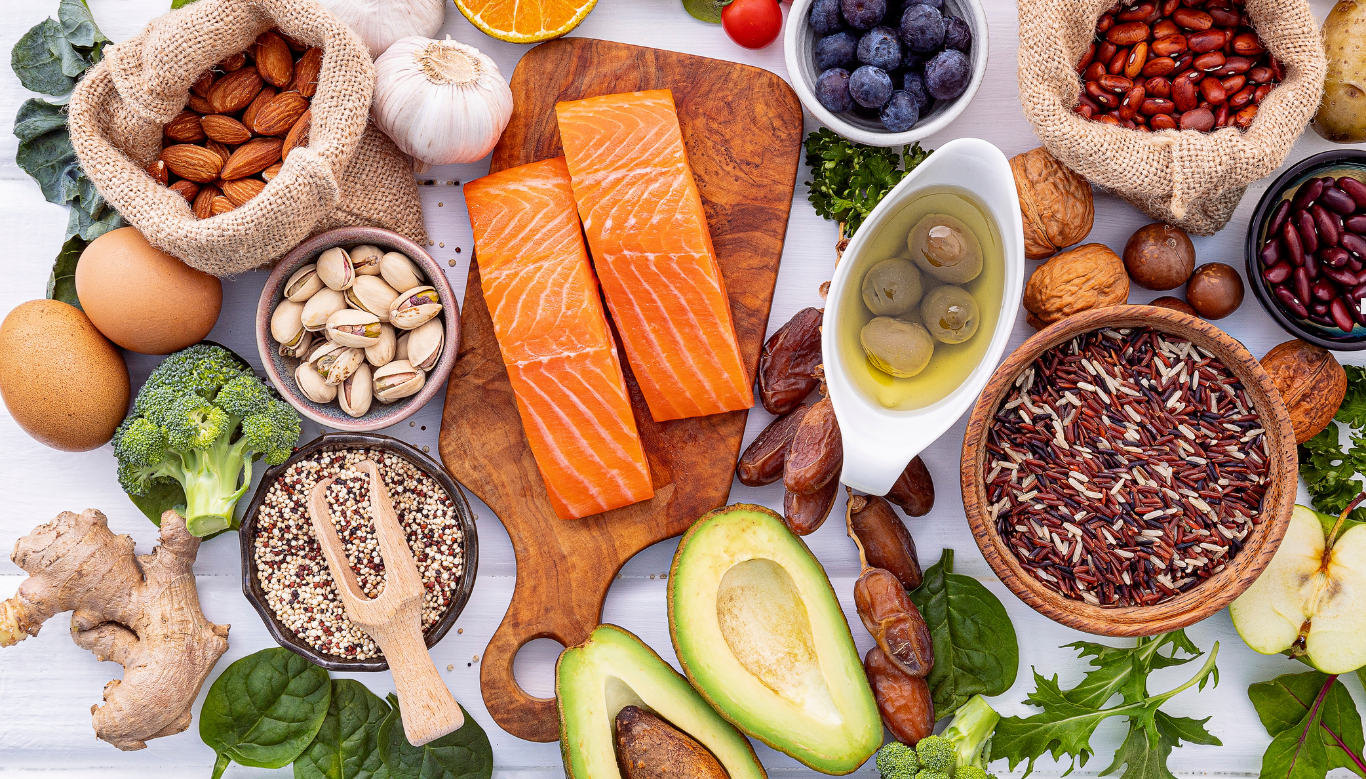
Lean Protein Sources
Protein amounts are based on 4 oz cooked weight unless otherwise noted.
Poultry and Meat:
- Chicken Breast (Skinless): 35g
- Turkey Breast (Skinless): 34g
- Lean Ground Turkey (93/7): 22g
- Lean Beef (93/7 Ground or Top Sirloin): 28g
- Pork Tenderloin: 29g
- Egg Whites: 5g per 3 tbsp (approx. 1 large white)
- Egg (Whole): 6g per large egg
Seafood:
- Shrimp: 27g
- Cod or Tilapia: 23g
- Tuna (Canned in Water): 26g per 5 oz can
- Salmon: 25g
- Scallops: 24g
Dairy:
- Non-fat Greek Yogurt (Plain): 18g per 3/4 cup
- Low-fat Cottage Cheese: 14g per 1/2 cup
- Ultra-Filtered Milk (Fairlife style): 13g per cup
Plant-Based Protein:
- Seitan: 25g per 3.5 oz
- Tempeh: 15g per 1/2 cup*
- Extra Firm Tofu: 10g per 1/2 cup
- Edamame: 9g per 1/2 cup*
- Nutritional Yeast: 8g per 1/4 cup
- Lentils: 9g per 1/2 cup* (Note: These are high in fiber too!)
- Black Bean Pasta: 25g per 2 oz dry serving
High Fiber Foods
Fiber amounts are sourced from the USDA. Whole fruits and vegetables are based on average medium sizes, and cooked foods are **noted with an asterisk ().**
Fruits:
- Raspberries: 8g per cup
- Pears (with skin): 5.5g
- Apples (with skin): 4.4g
- Bananas: 3.1g
- Oranges: 3.1g
- Strawberries: 3g per cup
Vegetables:
- Artichokes: 10.3g
- Broccoli: 5.1g per cup*
- Brussels Sprouts: 4.1g per cup*
- Acorn Squash: 9g per cup*
- Sweet Potatoes (with skin): 3.8g
- Carrots: 3.6g per cup
Nuts and Seeds:
- Chia Seeds: 5g per tbsp
- Flaxseeds: 3.3g per tbsp
- Almonds: 3.5g per oz
- Pistachios: 2.9g per oz
- Sunflower Seeds: 2.4g per oz
- Pumpkin Seeds: 2.9g per oz
Grains:
- Barley: 6g per cup*
- Quinoa: 5.2g per cup*
- Brown Rice: 3.5g per cup*
- Oatmeal: 4g per cup*
- Whole Wheat Pasta: 6.3g per cup*
- Bulgur: 8.2g per cup*
Beans and Legumes:
- Navy Beans: 19.1g per cup*
- Pinto Beans: 15.4g per cup*
- Black Beans: 15g per cup*
- Lentils: 15.6g per cup*
- Chickpeas (Garbanzo Beans): 12.5g per cup*
- Kidney Beans: 13.1g per cup*
💡 Tracking Tip: Raw vs. Cooked
When using the reference lists above, keep in mind that meat loses about 25% of its weight during the cooking process. If your goal is to eat 4 oz of cooked chicken breast, you actually need to start with roughly 5.3 oz of raw chicken. Most nutritional databases (like the USDA) provide values for cooked weight unless otherwise noted!
What’s Next?
Now that we have the grocery list, it’s time to put it into action. Over the next few weeks, I’ll be sharing a variety of easy, high-protein and high-fiber recipes and meal examples. From simple 15-minute dinners to grab-and-go lunches, I’ll show you exactly how to combine these ingredients into meals that keep you full without requiring hours in the kitchen.